
The COM stands for 'communication', and each one has a unique number, known as the COM Port number. In this case the COM Port number is COM3. If you don't see the COM port verify the cable is plugged in, and check that you installed the VCP FTDI driver. Then right click and select Properties. Before you can start talking to the sniffer, you'll need to install a standard FTDI driver for the FT231x located on the device. Find the appropriate FTDI VCP installer on the FTDI Driver Download Page, install it on you system, and then insert the sniffer in any USB port on your system. Port of Adafruit ST7735/ST7789 library for Particle devices. Ported from Adafruit-ST7735-Library, version 1.2.7. I've removed the examples because it's not possible to have dependencies for individual examples and the necessary libraries won't be included and the build will fail.
| Industry | Open-source hardware |
|---|---|
| Founded | 2005 |
| Founder | Limor Fried |
| Headquarters | New York City (SoHo, Manhattan), New York , |
| Revenue | US$45 million (2016)[1] |
Number of employees | 105[1] (2016) |
| Website | adafruit.com |
Adafruit Industries is an open-source hardware company based in New York City. It was founded by Limor Fried in 2005.[2] The company designs, manufactures and sells a number of electronics products, electronics components, tools and accessories. It also produces a number of learning resources, including live and recorded videos related to electronics, technology, and programming.
History[edit]
Limor Fried, then a student at Massachusetts Institute of Technology, began selling electronic kits on her website from her own designs in 2005.[3][4] She later moved to New York City and established Adafruit Industries.[5]
In 2010, Adafruit offered a US$1,000 (equivalent to $1,172 in 2019) reward for whoever could hack Microsoft's Kinect to make its motion sensing capabilities available for use for other projects. This reward was increased to $2,000 and then $3,000 following Microsoft's concerns about tampering.[6][7][8]
The company had $22 million in revenue in 2013 and $33 million in 2014.[5]
Company name[edit]
The name Adafruit comes from Fried's online moniker 'Ladyada', itself a homage to computer science pioneer Ada Lovelace. The company's goal is to get more people involved in technology, science and engineering.[9]
Products[edit]
In addition to distributing third party components and boards such as the Raspberry Pi, Adafruit develops and sells its own development boards for educational and hobbyist purposes. In 2016, the company released the Circuit Playground, a board with an AtmelATmega32u4 microcontroller[10] and a variety of sensors, followed in 2017 by the more powerful Atmel SAMD21 based Circuit Playground Express. They, like many Adafruit products, are circular in shape for ease of use in education and wearable electronics projects,[11] along with the FLORA and Gemma, the companies wearable electronics development platforms. In 2017, Adafruit Industries best selling product was the Circuit Playground Express[better source needed]
NeoPixel[edit]
NeoPixel is Adafruit's brand of individually-addressable red-green-blue (RGB) LED. They are based on the WS2812 LED and WS2811 driver, where the WS2811 is integrated into the LED, for reduced footprint. Adafruit manufactures several products with NeoPixels with form factors such as strips, rings, matrices, Arduino shields, traditional five-millimeter cylinder LED and individual NeoPixel with or without a PCB. The control protocol for NeoPixels is based on only one communication wire. Adafruit provides an Arduino library[12] and a Python Library[13] to help with the programming of NeoPixels. In addition to the traditional RGB technology, Adafruit manufactures a red-green-blue-white (RGBW) variant of NeoPixel for all products except those that feature a NeoPixel Mini 3535. Those integrate an additional white LED in the package for extra possible color mixes and selectable white color temperature (the company sells single NeoPixels with a 6000K, 4500K and 3000K color temperature).
CircuitPython[edit]

In January, 2017, Adafruit introduced CircuitPython, a fork of the MicroPython programming language optimized to run on select Adafruit products.[14] CircuitPython currently runs on Adafruit boards with a flash memory chip and one of the following microcontrollers: Atmel SAMD21 (M0), Atmel SAMD51 (M4), and the Nordic Semiconductor nRF52840.[15]
In 2019, resources for CircuitPython were moved to circuitpython.org, a move to show that the number of third-party boards using CircuitPython had grown beyond those only manufactured by Adafruit.[16] This includes both CircuitPython for microcontrollers and CircuitPython on single-board computers using a compatibility layer Adafruit named 'Blinka', to access general-purpose input/output functionality and compatibility with a library of over 160 sensors and drivers.[17]
Feather development boards[edit]
The Feather development boards constitute Adafruit's broadest platform of 'Arduino-like' boards.[18] The boards all share similarities in that they have the same form factor, same pinout, similar microcontrollers, and feature lithium polymer battery charging. Certain boards have special features in addition to the microcontroller breakout, such as Bluetooth, Wi-Fi or cellular network connectivity or built-in prototyping space or SD card communication. The name 'Feather' comes from the fact that the boards are small, thin, light and easily powered from a battery. In addition to the boards themselves, Adafruit engineers and manufactures 'FeatherWings', which are expansion cards allowing the addition of features such as an LCD, a NeoPixel array or DC motor drivers.
Adafruit Learning System[edit]
In addition to manufacturing and selling electronic devices, Adafruit regularly publishes tutorials featuring their products. The tutorials show how to build projects, highlighting their products' abilities and strengths. The site hosts close to 2400 guides[19] and articles written by collaborators. The guides range from teardowns of existing wearable electronic devices to 3D printing projects to overview and introduction of Adafruit merchandise and how to build projects.
Presence on YouTube[edit]
Adafruit Industries has a substantial presence on the online video streaming website YouTube.[20] The channel has been active since April 2, 2006. The company was awarded a YouTube Silver Play Button in August 2015 for having surpassed 100,000 subscribers and, as of the end of 2020, has 352,000 subscribers.[21] Adafruit creates different types of videos, all on electronics, with most featuring one of their products. Each week, several live shows are streamed.
Ask an Engineer[edit]
This weekly show was started in 2010 in Fried's living room. The concept was that viewers could ask her questions about engineering while she was assembling an electronics kit and Phillip Torrone, her spouse, was preparing shipments. The show is broadcast on YouTube with behind-the-scenes content available on Discord. The company states that this is the longest-running live electronics show. Some of the sections of the stream are new products where Fried demonstrates new products; Time Travel, where the hosts look back on the world of makers, hackers, artists and engineers and often highlight a special person or event; 3D Printing, where they showcase a special project or product related to the industry; a Q&A session; and a trivia question, where the first viewer with the correct answer wins a product. There is sometimes a section dedicated to Raspberry Pi and Arduino news and a section where the hosts read a positive email they have received. The show airs on Wednesdays at 8PM ET on the company's YouTube channel and is still run by Limor Fried and Phillip Torrone, with guests often present. As of February 2016, there have been almost 200 editions of the show, totalling almost 7 million minutes watched, a half million video views and 33 thousand playlist views.[better source needed]

Show-and-Tell[edit]
Show-and-Tell is Adafruit's live show where makers from all around the world share electronic projects they are currently working on. The show is first broadcast at 7:30PM ET on Wednesdays, and runs for 30 minutes. It is hosted by Limor Fried and Phillip Torrone and uses the Google+ Hangouts platform. Over the four years that it has been running, Show-and-Tell has been produced more than 200 times, collecting more than 2.8 million minutes watched, about 500,000 video views and with 27,000 playlist views.[better source needed]
3D Hangouts with Noe and Pedro Ruiz[edit]
3D Hangouts with Noe and Pedro Ruiz goes over the 3D printing industry (most typically about desktop FDM printers). Every week, on Thursday, a 30-minute edition is released where the two brothers discuss news about the industry, specific projects that they are working on, share 3D printing tips and tricks and answer viewer's questions and comments. They also showcase projects and prints from the online community. The show was started in 2014.[better source needed]
John Park's Workshop[edit]
The weekly John Park's Workshop show is broadcast live from John Edgar Park's workshop as he builds creative technology projects – from mystery boxes to ninja timers to synthesizers to coffee robots – while teaching viewers the skills to create their own. The creations made by Park demonstrate the weekly project (which is later developed into a tutorial on Adafruit's Learning System), covers fundamental tips and tricks for working with the featured tools and materials, interacts with viewers, and answers questions over chat messaging systems in YouTube and Discord.[better source needed]
Wearable Electronics with Becky Stern[edit]
Wearable Electronics with Becky Stern was Adafruit's live show dedicated to the wearable electronics industry. It was hosted by the American artist Becky Stern. In the show, industry news, projects, techniques and materials were covered and discussed. It aired every Wednesday at 2PM ET and was produced for 122 episodes, from 2013 to 2016. The last edition was streamed on February 10, 2016.[22]
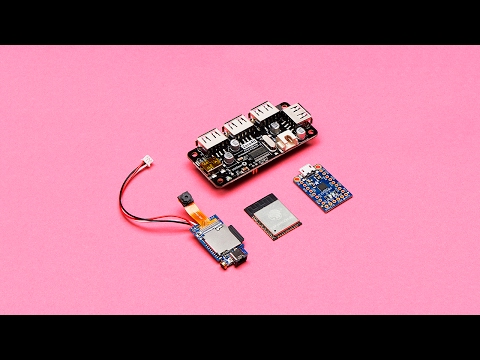
Adafruit Industries Ny
See also[edit]
References[edit]
- ^ abGareth Branwyn (June 14, 2017). 'Ladyada and Adafruit featured in the latest issue of Make:'. Boing Boing. Retrieved October 29, 2018.
- ^Porter, Jane (2012-09-12). 'Spotlight: Adafruit Industries' Limor Fried, Entrepreneur of 2012 Finalist'. Entrepreneur. Retrieved 2020-04-22.
- ^'Entrepreneur of 2012: Limor Fried'. Retrieved February 22, 2015.
- ^'Women Entrepreneurs to Bet On'. Retrieved February 22, 2015.
- ^ abMatt Weinberger (August 18, 2015). 'How one woman turned her passion for tinkering into a $33 million business – without a dime of funding'. Business Insider. Retrieved October 21, 2018.
- ^'Kinect Hack Makes Microsoft Angry, Deny its Existence'. PCWorld. Retrieved November 23, 2015.
- ^'Bounty offered for open-source Kinect driver'. cnet.com. Retrieved December 9, 2015.
- ^'$2,000 Bounty Put on Open-Source Kinect Drivers'. wired.com. Retrieved December 9, 2015.
- ^Rozenfeld, Monica (September 9, 2015). 'How DIY Electronics Startup Adafruit Industries Became a Multimillion-Dollar Company: IEEE Member Limor Fried started the venture in her dorm room at MIT'. theinstitute.ieee.org. Retrieved February 23, 2016.
- ^Horsey, Julian (January 14, 2016). 'Adafruit Unveils New Circuit Playground Board To Learn About Electronics'. Geeky Gadgets. Retrieved January 16, 2016.
- ^'Adafruit's best open source wearables of 2015'. Opensource.com. Retrieved January 16, 2016.
- ^Fried, Limor; Burgess, Phil (2019-01-17). 'Adafruit NeoPixel Library'. GitHub. Adafruit. Retrieved 2019-02-21.
- ^Fried, Limor; Burgess, Phil (2019-02-05). 'Adafruit CircuitPython NeoPixel'. GitHub. Adafruit. Retrieved 2019-02-21.
- ^'Awesome CircuitPython List'. GitHub. Retrieved December 21, 2018.
- ^Shawcroft, Scott. 'Adafruit CircuitPython'. GitHub. Retrieved 2019-02-21.
- ^'CircuitPython'. Retrieved 2019-07-27.
- ^'CircuitPython Blinka'. Retrieved 2019-07-27.
- ^Barela, Anne (2019-02-19). 'Awesome Feather'(Markdown). GitHub. Adafruit. Retrieved 2019-02-21.
- ^'Adafruit Learning System'. Retrieved December 30, 2020.
- ^'An interview with Limor Fried, Founder at Adafruit'. Archived from the original on February 23, 2015. Retrieved February 22, 2015.
- ^'Adafruit channel on YouTube.com'. Retrieved December 30, 2020.
- ^Stern, Becky (2016-02-10). 'Jess cohosts Wearable Electronics with Becky Stern 2/10/2016 – LIVE'. YouTube. Adafruit. Retrieved 2019-02-21.
External links[edit]
CircuitPython 6.1.0-rc.1 is the second release candidate of CircuitPython 6.1.0. See Port status below for details on port stability, and Known Issues for known problems. If you find any issues with this release, please file an issue. If no significant issues are found within a few days, we’ll release this version as stable.
Download from circuitpython.org
Adafruit Industries Llc Ports
Downloads are available from circuitpython.org. The site makes it easy to select the correct file and language for your board. The downloads page is here. Downloads are no longer available from the GitHub release pages because of the large number of files for each release.
Installation
To install follow the instructions in our new Welcome to CircuitPython! guide. To install the latest libraries, see this page in that guide.
Try the latest version of the Mu editor for creating and editing your CircuitPython programs and for easy access to the CircuitPython serial connection (the REPL).
Port status
CircuitPython has a number of “ports” that are the core implementation for a variety of microcontroller families. Stability varies on a per-port basis. As of this release, atmel-samd, nrf, and stm for the F4 family are stable. cxd56, esp32s2, and stm for other chip families are being actively improved but may be missing functionality and have bugs. litex and mimxrt10xx are in an alpha state and will have bugs and missing functionality.
Changes since 6.1.0 Release Candidate 0
Fixes and enhancements
- Update
ulabto version 1.6.1. #3972. Thanks @jepler. - Use double-quotes in initial
code.pyprogram. #3973. Thanks @kattni. - Add
len(alarm.sleep_memory)andbool(alarm.sleep_memory). #3958. Thanks @dhalbert. - Add native support for
msgpack. #3659. Thanks @iot49.
Board- and port-specific changes
- atmel-samd and nrf: Tick counter was being truncated when copied. #3939. Thanks @dhalbert.
- atmel-samd:
- Use correct TCC resolution for
PWMOut. #3960. Thanks @dhalbert. - Use correct channel for
AnalogOut. #3966. Thanks @dhalbert.
- Use correct TCC resolution for
- nrf:
- Fix BLE timeout check for
start_scan(). Round float BLE timing values instead of truncating. #3942, #2930. Thanks @dhalbert. - Don’t check length on
gattcwrite for remote characteristics or descriptors. #3993. Thanks @dhalbert.
- Fix BLE timeout check for
- MagTag:
- add accelerometer interrupt pin. #3940. Thanks @caternuson.
- Add
board.A1as (preferred) name for `board.AD1. #4001. Thanks @dhalbert.
- ESP32-S2:
- Implement
I2SAudioOut. #3733. Thanks @jepler. - Convert README to
.rst. #3945. Thanks @2bndy5. - Correct data length for
socket.recvfrom_into(). #3955. Thanks @caiokat. - Add
sys.platform. #3954. Thanks @anecdata. - FeatherS2: Use DotStar for status LED. #3930. Thanks @jerryneedell.
- Add
network.authmode. #3944. Thanks @BennyE. - Add debug logging for all WiFi events; remove unneeded WiFi setup call. #3903. Thanks @anecdata.
- Reduce power consumption when
TouchAlarmnot in use; allow multipleTouchAlarmpins. #3969. Thanks @microDev1.
- Implement
- TG-Watch: Multiple revisions, including frozen modules. #3991. Thanks @TG-Techie.
Build and infrastructure changes
- Pass
DEBUGmake flag into code withCIRCUITPY_DEBUGpreprocessor macro. #3957. Thanks @dhalbert. - Shrink some German builds that no longer fit. #3983. Thanks @dhalbert.
- ESP32-S2: Fix
make flash. #3982. Thanks @jepler. - Add
robots.txtso search engines won’t crawl obsolete documentation in ReadTheDocs. #3291. Thanks @dhalbert. - Bump key for GitHub Actions cache to avoid bad cached data. #3997. Thanks @dhalbert.
- Update
uzlibto version 2.9.5, used in unix build. #4002. Thanks @jepler. - Fix parallel build problem for unix build. #4004. Thanks @jepler.

Documentation
- Translation additions and improvements. Thanks:
- @wtuemura (Brazilian Portugese)
- @HugoDahl (French)
- @BumblebeeMan (German)
New boards since 6.1.0 Release Candidate 0
- Adafruit Feather ESP32-S2 mini module with and without TFT display. #3959. Thanks @ladyada.
- Adafruit NeoPixel Trinkey. #3978. Thanks @ladyada.
Full commit log is here.
Breaking changes since 5.x
i2cslaveis nowi2cperipheraland the class in it is changed as well.- The
stopkwarg has been removed fromI2C.writeto(). If no stop is desired, then usewriteto_then_readfrom. - The default speed of busio.I2C and board.I2C is now 100khz, not 400khz as before. Use
busio.I2Cto set the speed explicitly. #3471 Thanks @caternuson, @ladyada, @hierophect and @tannewt _bleio.ConnectionErrorhas be removed. Code will now raise the nativeConnectionErrorinstead.
Known issues
- ESP32-S2: Crash when repeatedly creating and destroying busio.I2C object on ESP32-S2. #3846.
- Built-in
adafruit_bus_devicehas been disabled due to issues (#3859, #3856), please install the version from the Library Bundle - Writing several larger files to
CIRCUITPYwhen there is no serial connection to the board can take a long time or hang. To speed up copying, open a serial (REPL) connection. #3986. - See https://github.com/adafruit/circuitpython/issues for other issues.
Thanks
Thank you to all who used, tested, and contributed since 6.1.0 Release Candidate 0, including @2bndy5, @anecdata, @BennyE, @BumblebeeMan, @caiokat, @caternuson, @dhalbert, @hugodahl, @jepler, @jerryneedell, @kattni, @ladyada, @microDev1, @sommersoft, @tannewt, @TG-Techie, @weblate, @wtuemura, and many others on Discord. Join us on the Discord chat to collaborate.
Documentation
Documentation is available in readthedocs.io.
This release is based on MicroPython 1.9.4 @25ae98f. Support upstream MicroPython by purchasing a PyBoard (from Adafruit here) or sponsoring MicroPython on GitHub.
Translations
One important feature of CircuitPython is translated control and error messages. With the help of fellow open source project Weblate, we’re making it even easier to add or improve translations. Sign in with an existing account such as Github, Google or Facebook and start contributing through a simple web interface. No forks or pull requests needed!
Troubleshooting
Check out this guide for info on common problems with CircuitPython. If you are still having issues, then post to the Adafruit Support Forums and join Discord.
Assets
Builds are no longer stored as assets on this release page, because there are too many of them. Please see the Download from circuitpython.org section above.